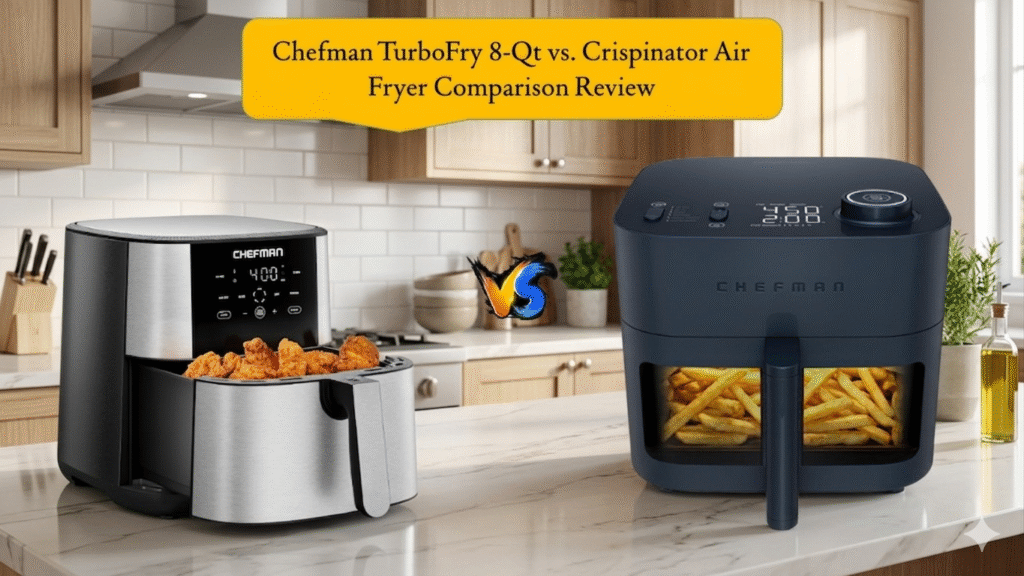
Walking into a kitchen equipped with two high-capacity 8-quart air fryers might seem like overkill to some, but for anyone chasing the “perfect crisp,” it is a dream laboratory. I have spent the last few weeks putting the Chefman TurboFry 8-Qt and the Chefman Crispinator through a rigorous gauntlet of chicken wings, frozen mozzarella sticks, and even dehydrated apple slices.
Chefman has a knack for dominating the mid-range air fryer market, but these two models represent a fascinating fork in the road for the brand. On one hand, you have the TurboFry – a stainless steel workhorse that focuses on a streamlined “Hi-Fry” finish. On the other, you have the Crispinator, a 2024 Red Dot Design Award winner that feels more like a high-end convection powerhouse with its viewing window and ceramic coating. While they both boast an 8-quart capacity, the way they move air and interact with your food is remarkably different. If you are trying to decide whether to go with the sleek stainless classic or the midnight-hued “evolution,” I’ve broken down my real-world experience to help you pick the right basket for your kitchen.
The Key Difference: Chefman TurboFry vs. Crispinator Air Fryer
The primary divide between the Chefman TurboFry and the Crispinator comes down to Motor Technology and Basket Surface.
- The Chefman Crispinator (The Advanced Specialist): This model is built with a high-powered DC motor, which Chefman claims makes it up to 40% faster than traditional models. It features a PFAS-free ceramic basket and a built-in viewing window with an interior light. It also expands your cooking range with 6 functions, including Broil and Keep Warm.
- The Chefman TurboFry (The High-Heat Classic): This unit relies on a standard AC motor but introduces a unique “HI-FRY” button. This feature automatically cranks the heat to 450°F for the final two minutes of a cycle to guarantee a golden-brown finish. It uses a traditional nonstick coating and focuses on a 4-in-1 interface (Air Fry, Bake, Reheat, and Frozen).
Essentially, the Crispinator is the faster, more eco-conscious option with visual monitoring, while the TurboFry is the dedicated “crisp specialist” that excels at the final finish of fried favorites.
Comparison Table: Chefman TurboFry vs. Crispinator Air Fryer
| Feature | Chefman TurboFry 8-Qt | Chefman Crispinator |
| Capacity | 8 Quarts | 8 Quarts |
| Functions | 4-in-1 (Air Fry, Bake, Reheat, Frozen) | 6-in-1 (Adds Broil & Keep Warm) |
| Max Temperature | 450°F (Hi-Fry phase) | 450°F (Constant) |
| Motor Type | Standard | High-Powered DC Motor |
| Basket Coating | Traditional Nonstick | PFAS-Free Ceramic |
| Monitoring | Closed Basket | Viewing Window + Light |
| Interface | Digital Touchscreen | Innovative Dial Controls |
| Design Award | N/A | 2024 Red Dot Winner |
| Warranty | 1-Year | 5-Year Assurance |
| View Current Price On Amazon | View on Amazon | View on Amazon |
Detailed Comparative Review: My Personal Kitchen Experience
-
Design: Stainless Steel vs. Midnight Aesthetics
When I placed these side-by-side, the visual contrast was immediate. The TurboFry has that classic “professional kitchen” look with its stainless steel wrap. It’s slightly more vertical in its dimensions, which I found better for tight corners between my toaster and my coffee maker.
The Crispinator, in its “Midnight” color, is genuinely a piece of functional art. It has a lower, wider profile. The standout, of course, is the viewing window. I cannot overstate how much I appreciated the interior light. There is something incredibly satisfying about watching a batch of fries turn from pale yellow to golden brown without having to pull the basket out and lose all that precious 450°F heat.
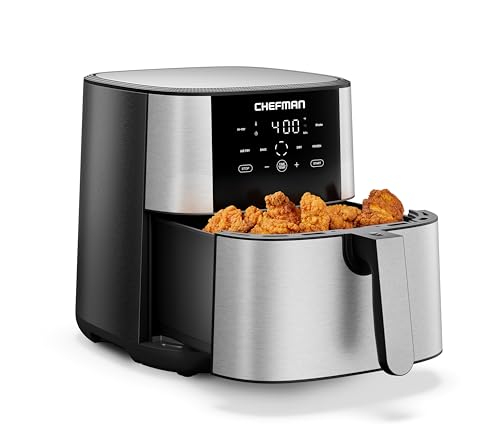
Chefman Air Fryer 8 Qt | TurboFry® 4-in-1 with 450°F Hi-Fry Option for Crispier Results | Bake, Dehydrate, Frozen |…
- FRY UP YOUR FAVORITES: Enjoy faster, healthier cooking for popular deep fryer foods like French fries, corn dogs, chicken wings, Brussels sprouts, and more! This stainless steel air fryer produces extra-crispy meals with a fraction of the calories compared to oily, messy deep fryers.
- FOUR-IN-ONE COOKING: This touchscreen air fryer features four functions, including Air Fry, Bake, and Reheat. Our new Frozen function defrosts and then crisps for an added crunch on fries or mozzarella sticks.
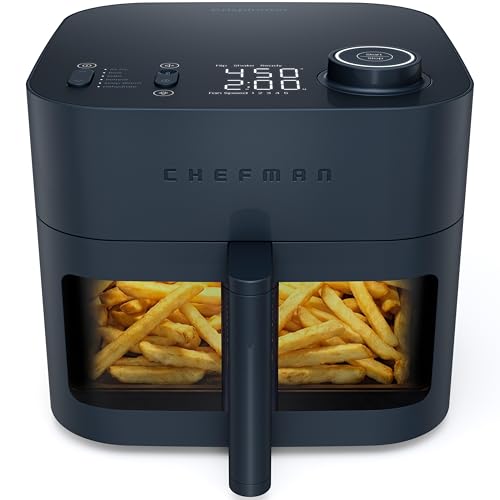
Chefman Crispinator Air Fryer 6-in-1 with 8 Qt capacity, 450°F Max Temp with TurboFry Pro Technology for Fast and Even…
- THE NEXT EVOLUTION OF AIRFRYERS: Experience big crisp like never before with the Chefman Crispinator, a countertop airfryer designed to produce deep fryer flavor without the added calories or the oily mess.
- UNSTOPPABLE FRYING POWER: With a high-powered DC motor, the Crispinator reaches an incredible 450°F for nonstop convection cooking. With improved heating times and whisper-quiet performance, this Chefman air fryer cooks faster than ever!
-
Ease of Use: Touchscreens vs. Dials
The interface experience is where these two really diverge.
- TurboFry UI: It uses a sleek, flat touchscreen. The buttons are responsive, and the “Frozen” function is a lifesaver. Usually, when you air fry frozen food, the outside gets crisp while the inside stays lukewarm. This setting seems to handle the defrost-to-crisp transition much more effectively.
- Crispinator UI: This model uses a dial-based system on the top of the unit. I found the dials to be much faster for making big jumps in temperature or time. If I want to go from 200°F (dehydrate) to 450°F (broil), a quick turn of the wrist is faster than tapping a screen 25 times. The LED Shake Reminder on both models is excellent – the beep is loud enough to hear over a television in the next room.
-
Functions: The Speed of the DC Motor
This is where the Crispinator really earns its name. I tested both with a full 8-quart load of chicken wings.
The Crispinator reached its peak temperature almost instantly. Because it uses a DC motor, the fan speed feels more intense but the noise is actually a bit more of a “whisper” than the TurboFry. The wings in the Crispinator were done about 4 minutes faster than the TurboFry.
However, the TurboFry has that “HI-FRY” button. When the timer hits the 2-minute mark and you hit that button, you can hear the machine kick into overdrive. It produces a very specific, “deep-fried” texture on the skin of the chicken that the Crispinator’s constant heat struggled to match. The TurboFry is the “finisher,” while the Crispinator is the “sprinter.”
-
Maintenance: Ceramic vs. Traditional Nonstick
Cleanup is my least favorite part of air frying, so I was looking for a clear winner here.
- The TurboFry: The nonstick basket is very reliable. Even with sugary BBQ sauce, I found that the top-rack dishwasher cycle handled it perfectly. The stainless steel exterior does require a bit of microfiber wiping to keep it looking shiny and free of smudge marks.
- The Crispinator: The PFAS-free ceramic basket is the gold standard for healthy cooking. Food seems to “slide” off it even better than traditional nonstick. Because it’s ceramic, you don’t get that “new plastic” smell during the first few uses. It’s also dishwasher safe, and the Midnight finish is much more forgiving with fingerprints than the stainless steel of the TurboFry.
Chefman TurboFry 8-Qt Air Fryer
Chefman Air Fryer 8 Qt | TurboFry® 4-in-1 with 450°F Hi-Fry Option for Crispier Results | Bake, Dehydrate, Frozen |…
- FRY UP YOUR FAVORITES: Enjoy faster, healthier cooking for popular deep fryer foods like French fries, corn dogs, chicken wings, Brussels sprouts, and more! This stainless steel air fryer produces extra-crispy meals with a fraction of the calories compared to oily, messy deep fryers.
- FOUR-IN-ONE COOKING: This touchscreen air fryer features four functions, including Air Fry, Bake, and Reheat. Our new Frozen function defrosts and then crisps for an added crunch on fries or mozzarella sticks.
Pros:
- HI-FRY Button: Exceptional for getting that final golden-brown crunch.
- Frozen Preset: Specifically tuned for frozen snacks.
- Stainless Aesthetic: Fits perfectly in modern, professional-looking kitchens.
- Compact Footprint: Maximizes basket size without hogging the counter.
Cons:
- Closed Basket: You have to open it to check progress, which drops the temperature.
- 1-Year Warranty: Standard, but significantly shorter than its sibling.
Chefman Crispinator Air Fryer
Chefman Crispinator Air Fryer 6-in-1 with 8 Qt capacity, 450°F Max Temp with TurboFry Pro Technology for Fast and Even…
- THE NEXT EVOLUTION OF AIRFRYERS: Experience big crisp like never before with the Chefman Crispinator, a countertop airfryer designed to produce deep fryer flavor without the added calories or the oily mess.
- UNSTOPPABLE FRYING POWER: With a high-powered DC motor, the Crispinator reaches an incredible 450°F for nonstop convection cooking. With improved heating times and whisper-quiet performance, this Chefman air fryer cooks faster than ever!
Pros:
- Viewing Window: Allows you to monitor cooking without losing heat.
- Ceramic Basket: Nontoxic, PFAS-free, and incredibly easy to clean.
- DC Motor: 40% faster cooking and noticeably quieter performance.
- 5-Year Assurance: An industry-leading warranty that shows Chefman’s confidence.
Cons:
- Larger Depth: Requires more “swing room” on the counter for the basket.
- Price: Usually sits at a higher price point due to the advanced tech.
The Verdict: Which Chefman Rules the Counter?
Both of these air fryers are top-tier in the 8-quart category, but they serve different priorities.
I recommend the Chefman TurboFry if: You are a fan of traditional fried textures. If you primarily cook wings, fries, and “bar food” from frozen, the HI-FRY button and the Frozen function are the tools you need. It is a reliable, stylish workhorse for the “set it and forget it” cook.
I recommend the Chefman Crispinator if: You are a “visual” cook who values speed and health. The viewing window is a game-changer for precision, and the PFAS-free ceramic coating is essential for those looking to remove chemicals from their kitchen. Plus, with a 5-year warranty, it is the better long-term investment for a busy family.
My Personal Choice: I am keeping the Crispinator. The combination of the viewing window and the whisper-quiet DC motor makes the cooking experience feel much more “premium.” Being able to see my food crisping up without opening the drawer is a luxury I didn’t know I needed until I had it.
Frequently Asked Questions
-
Can I really fit a whole chicken in these 8-quart baskets?
Yes. An 8-quart capacity is plenty for a 5-6 lb chicken. The Crispinator’s low-profile, wide basket design is actually slightly better for this, as it allows for better air circulation around the sides of a large bird compared to the more vertical TurboFry.
-
Is the “450°F” temperature safe for the ceramic coating?
Absolutely. Ceramic is naturally more heat-resistant than traditional nonstick coatings. The Crispinator is designed to handle that 450°F constant heat without any flaking or off-gassing.
-
How loud are these units?
The TurboFry sounds like a standard kitchen fan – not loud enough to be annoying, but you’ll know it’s on. The Crispinator is significantly quieter thanks to the DC motor; it’s more of a low hum than a roar.
-
Do I still need to shake the food if it has a viewing window?
Yes. While the window lets you see the top, the air still needs to circulate under the food. Both units will beep at the halfway point to remind you to shake or flip your ingredients to ensure even browning.
-
What does the “Frozen” button on the TurboFry actually do?
It starts the cycle at a slightly lower temperature to defrost the food evenly without burning the outside. Then, it automatically ramps up the heat for the second half of the cycle to ensure the exterior gets that signature crunch.